The Uk's Online TCG Marketplace | FREE UK SHIPPING on orders over £50 | 3 - 5 Working DAYs Delivery

Baron Nashor Riftbound Unleashed: Is the First Ultimate Rarity Card Worth Buying?
Baron Nashor is the first Ultimate Rarity card in Riftbound history. We break down the rarity, the £1,200–£1,500 price point, playability, and whether UK collectors should be holding one long-term.
RIFTBOUNDSET RELEASES
5/11/20264 min read
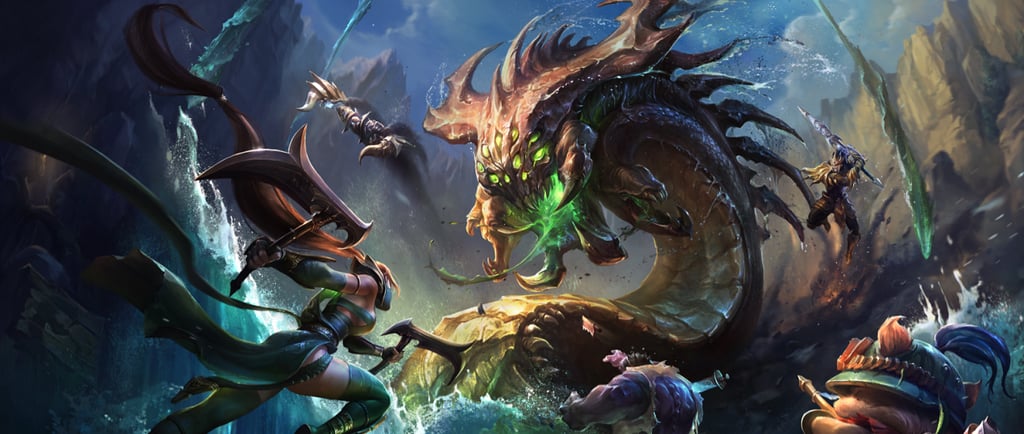
Riftbound Unleashed dropped on 8th May 2026, and while the set has plenty to get excited about, one card has dominated every conversation since the first boxes were cracked: Baron Nashor.
Not just because it looks incredible. Not just because it's the hardest card in the set to pull. But because Baron Nashor is the first Ultimate Rarity card in the entire history of Riftbound — a designation that didn't even exist before Unleashed.
That's a significant thing. And significant things in trading card games tend to carry significant price tags. Right now, Baron Nashor is trading at £1,200–£1,500 on the secondary market depending on condition. We're going to break down whether that's fair, whether it's playable, and — the question a lot of UK collectors are really asking — whether this card could one day look like a bargain.
What Makes Baron Nashor Different?
Every set has chase cards. Unleashed has several. But Baron Nashor sits in a tier of its own because Riot created an entirely new rarity classification to house it: Ultimate Rarity.
There is currently one Ultimate Rarity card in Riftbound. This is it.
For anyone who plays League of Legends, Baron Nashor needs no introduction. It's the most iconic neutral objective in the game — the creature that appears in the top river and swings entire matches when a team secures it. The decision to use Baron as the first UR in the TCG wasn't accidental. It's a statement about what Riot thinks this card represents in the game's ecosystem.
In collector terms, that narrative matters. Cards with a clear story behind them tend to hold and grow value better than arbitrary chase cards. The "first ever" tag is one of the most durable in the hobby.
The Rarity Is Genuinely Extreme
Let's put the numbers into context. Unleashed booster boxes contain 24 packs with 14 cards per pack. The pull rate for an Ultimate Rarity Baron Nashor is approximately one per 42 boxes.
At current market prices of around £125 per box, that means you'd statistically spend somewhere in the region of £5,250 in sealed product to crack one Baron Nashor. And that's before accounting for condition — a damaged card, a dent in the corner, a surface scratch — all of which will affect any graded value significantly.
At £1,200–£1,500 on the secondary market, buying outright isn't just convenient. It's economically rational by a significant margin.
Is the Price Point Justified?
At the time of writing, yes — we think it is.
Here's the comparison that puts it in perspective. A first edition Charizard holographic from Pokémon's Base Set sold for pence in 1999. Today, a PSA 10 graded copy sells for between £350,000 and £400,000 depending on auction. Even a PSA 9 sits comfortably above £40,000. The point isn't that Baron Nashor will do the same — it's that the pattern of how historically significant cards appreciate is well established in this hobby.
Baron Nashor has the building blocks: extreme scarcity, a debut "first ever" designation, IP backing from one of the world's largest game studios, and a growing collector community.
The risk, of course, is that Riftbound doesn't grow into the kind of game that sustains long-term collector demand. We'll come back to that.
Is It Viable in Competitive Play?
This is an honest answer: for most players at most tables, no — and that's not really the point.
In trading card games, the rarest cards are rarely the most competitively played. The barrier to acquiring them is too high for most competitive players, who tend to optimise for consistency and value rather than chasing the hardest pulls. Whether Baron Nashor's in-game stats justify running it in a competitive deck is a separate question from whether it's worth owning — and we'd argue the two audiences are almost entirely different.
The Unleashed meta is also still very fresh. Competitive consensus takes weeks to form after a new set drops. Baron Nashor may find a place in high-level play; it may function better as a finisher or win condition in specific deck archetypes. What we can say is this: its value is not contingent on competitive viability. Plenty of the most valuable cards in the world have never seen a competitive table.
If you're buying Baron Nashor to play it, the price makes almost no sense. If you're buying it to hold, display, or eventually grade — the playability question largely doesn't apply.
The Pokémon Question: What If Riftbound Keeps Growing?
This is the one that gets speculative — but it's worth taking seriously.
Pokémon is the highest-grossing media franchise in history. Its TCG is worth billions. But in 1999, nobody knew that. The collectors who held early base set cards because they liked Pokémon, not because they had a financial thesis, are the ones sitting on serious assets today.
Riot Games is not a small indie studio chancing its arm. It has 150 million registered players across its game portfolio. League of Legends is played competitively in arenas that sell out. Riftbound has a built-in global audience that most new TCGs could only dream of.
The honest uncertainty is this: Riftbound still has to prove it can sustain a long-term competitive and collector scene at scale. Set 1 and Set 2 laid good foundations. Unleashed, with the introduction of the Ultimate Rarity tier, suggests Riot is playing a long game.
If Riftbound achieves even a fraction of Pokémon's cultural penetration, the first Ultimate Rarity card — pulled at a rate of one per 42 boxes, in the set that introduced the format — will look extraordinarily cheap at £1,500 in retrospect.
If the game stalls, it won't.
That's the investment thesis in full. It's not certain. It's compelling.
Our Verdict
Baron Nashor is the most historically significant card Riftbound has produced — the first-ever Ultimate Rarity in the game
The pull rate makes cracking for it mathematically irrational; the secondary market is the sensible route at £1,200–£1,500
Competitive playability is secondary to its collector value — buy it to hold, not to play
If you acquire one, get it graded immediately; condition is everything for long-term value
The Pokémon parallel is not guaranteed, but the structural similarities are real — Riot's IP strength is unlike anything else in the current TCG space
This is a high-risk, high-conviction hold for collectors who believe in the game's trajectory
Shop Riftbound Unleashed at Summoners Vault
We're restocking Unleashed sealed product shortly. In the meantime, browse our full Riftbound range — including Origins and Spiritforged booster boxes — and get notified when Unleashed lands.
Summoners Vault
Step onto the Rift, fully prepared.
About
Contact
SummonersVault@outlook.com
© 2026. All rights reserved.
Support